Showing posts with label Homeless. Show all posts

Tuesday, February 15, 2011

they're waiting still (to be released)


this is my tent mine it is the tiniest in town i don't stay in it every night now i am trying to take care of myself i am working in the world now i am trying to keep track of myself i am down to one sleeping bag in camp i am nailed to the floor my sky is a plastic sky the weather is balmy &my home is taking a slow breath this is my home i am not always there &there was never a home i was in always except that first home will there be another

there are fewer people milling around now fewer coughers it is the 1st of the month &those who could did those who couldn't well they're waiting still (to be released) waiting with me &ovid &io &jove &juno &isis

it is beginning to rain on my home my tarp is crinkling the television is chattering away i have a cotton shirt on &a jacket i am biking biking the breeze feels like spring but then afterwards i was cool camp is the kind of place i could stay tonight people are listening talking to one another putting puzzles together dawn &randy &rickey are pulling chairs close the tarps &tents are coming down 3 smurfs are gone now poof the tent over my bike is gone poof poof soon i too will go for good where to i have a security to do this week now i am claiming my outside work now i can substitute 2 litter busters for 2 securities now i can pick up cigarette butts in the neighborhood while wearing a bright yellow vest a yellow letter H

the rain is raining harder now it is coming down on the wind which is gusting the rain is pelting like almonds now i suspect the smell of dogs is somewhere rising the smell of sulpher from the roads the oil mixing slipping into grooves it is quiet for a long while it is quiet there is no other sound than plastic &the tv low &the voices lower &the footsteps on patrol like prison guards it is quiet quiet quiet at the perimeter a car passes like a bandwidth
then again from nowhere it comes a body of wind my ceiling collapses &fills it is 4:47am someone knocked the lid off the garbage can someone is putting it sloppily on someone is sliding the can outside my tent someone someone is coughing exhaling six convulsing broken lungs are coughing it is not raining there is no wind now i am not alone lake city is humming 5 blocks downhill someone is taking a pill someone someone is talking to a sick person this take this to the doctor tell him this is what you need someone is protecting us thank you the wind is someone too gently pressing on my tent 2 pills are sliding in a plastic bottle take them take them take them

Harry Potter
I've been driving an old borrowed car, a Honda Civic with peeling paint, but when residents from TC3 get in they all say the same thing--What comfort! Transportation by car is a rare treat. O the things we take for granted! I was invited, by a new friend, to go downtown to see a movie. Yes, I'd love to. I drove the three of us to town, dropped them off near the Compass Center to check their mail and cash their checks and parked uptown. I walked back in to meet them at the theatre. We ate popcorn, drank sodas, saw Harry Potter on the big screen--the normal life! It was a lovely outing. To think, it took someone asking me. How honored, to be called a friend, to be asked. Rowling, you know, was on social security and raising her daughter alone before the success of Harry Potter in 1997. She is now helping the homeless in Great Bristain. Four years ago, she allowed BISS to publish the first chapter of Harry Potter and the Order of the Phoenix before it hit the shops. When you get where you are going, remember where you came from.

The Order of the Phoenix
Why is it I've been swarmed, questioned and called out these past three months? Is it because of my relationship to the homeless? I have to wonder. It is ever so coincidental. I began to sense it, a kind of culture of difference, shortly after beginning my residency. "Are you safe?" they asked. "More than safe," I said, "I feel cared for." They cocked their heads. Hmmm. They don't believe me. After my last outing, I left my friends in a little urban park and walked up the hill to retrieve the car. One of the men is disabled and cannot navigate the hills. I told him--Wait here, I'll be back with the car. I drove around and saw them surrounded by bicycle police. O no! My friends approached with a citation in hand. Offense: Urinating in public. Blast! Shouldn't have had that second big gulp! He said, "First time for everything." I said, "You anointed one of my favorite places in Seattle." We laughed. Another outing, different people, also homeless, I was waiting in the alleyway while my friend picked up a dress from a daughter for a special affair. I was parked with my flashers on, three cop cars swung around, all at once, and swarmed us. Something was planted at the foot of the man standing behind my car. The female officer comes to my window. "Are you aware this man is a known narcotics dealer?" "No, I am not aware." No one asks who I am. No one asks for identification. After a brief interrogation, my homeless friends are released. They say that if I were not with them, they would have gone to jail. Or so they think. For what? The woman who made the call was sitting across the alley in an open car staring at us. Her hair was thinning. She had photosensitive lenses on. Shouldn't they post a warning: This Alley Is Hot. Linger Longer than Two Minutes and You Will Be Questioned. Anyway, what were we doing in that alley? A family member of the homeless woman lives there. Coincidence? Hmmm. A third incident. I invited a homeless friend to dinner. He joined me and my two friends at the house I am watching (friends on vacation). Because he smokes, he goes out frequently to the porch. Neighbors call the home owners to warn them someone suspicious is on their porch. Granted, this neighborhood has been vandalized in the past. My own car has been broken into right here, in front of this house, while I was sleeping inside. The neighbors are on high alert for difference, for people who look different, act different. What do villains look like? They smoke.

Sunday, January 30, 2011

The Business of Being Homeless


Executive Committee
There is an executive committee (EC) in charge of running Tent City. Every Wednesday night, at an outdoor, mandatory, camp-wide meeting, five ECs and two backup ECs are elected. Once a week, the whole camp convenes in the heart of their plastic city to air their complaints, voice their opinions and address camp business. Everyone gathers in the common area, in the rain, in the cold, smoking, waiting, growing frustrated with the process, ever long, ever tired of the same voices and the same issues, accruing an impossible number of new rules and positions. Rarely does one hear a positive turn. We also elect Tent Master, Fence Master, Papa Smurf, Kitchen Coordinator, Donations Coordinator, Maintenance Coordinator and Blanket Washer at this meeting. Each position carries with it a set number of security credits, otherwise earned by working 3-hour shifts as a camp security officer.

Job Description
The standard tour of duty for an EC is two weeks, after which they're clear of all duties for the following two weeks (except for their community credit which must still be earned once every two weeks). Those two weeks off from security duty are considered the pay, incentive and relief for a job that carries with it a fair share of work and worry. If you make it one month, you get a month off. It's like earning vacation pay in the regular world. The EC on duty is in charge of handing out bus tickets, screening in new tenants, answering the phone and making sure the security officers are doing their job. The EC is hammered at relentlessly by requests from campers (for coffee, nails, tape, pens, paperwork, information on this or that meeting) and is advised, all the while, by numerous lesser chiefs on how to do their job. The EC is kept busy handing out and receiving incident reports (the paperwork by which one camper formally writes up another camper for cursing, stealing, hoarding, being loud, belligerent, smoking in an inappropriate place, &c). What happens on your shift usually affects the other ECs. At the start and/or the of a shift, you might spend 20 to 40 mins listening to or explaining what happened during your previous shift and discussing what needs to be done now. The desk is often awhirl when you arrive and doesn't settle down until an hour into your shift. Sometimes it never settles down. There is rarely consensus among the ECs about what's to be done when a problem arises and, since most issues cross shifts and there are few quick answers, the problems either continue or build. It sometimes leads to one EC writing up another EC for acting in a way other than they see as proper. All this amounts to a great deal of paperwork and exhaustion and, in the long run, is damaging to the whole camp. I suspect copious amounts of stress hormones are produced behind the desk that lead to unnatural and premature aging in the homeless population.

Pay Day
ECs work five to six 6-hour shifts per week. That's 30-36 hours without pay. The incentive is that you get to rule the roost, but then you're responsible for anything that happens, in and out of camp, while you're on duty. Shifts run from midnight-6am, 6am-noon, noon-6pm and 6pm-midnight. I tried them all. The graveyard and afternoon shifts seem best to me. Quietest. The EC is posted at a desk at the entrance to Tent City 3 in an open, tarp-covered structure. At the current location, that means a parking lot across from Maple Leaf Lutheran Church in Meadowbrook (Seattle). The front desk is the only place with a heater, an electric heater. The ECs is tethered to the desk for 6 inactive hours, so the heater helps keep her from freezing.


Mimi Signs On--Receives Phone, Keys, 200 Bus Tickets
You keep a log of everything that happens while you're on duty. If a visitor comes in, you write it down. If you receive a phone call or a donation or are having problems with a camper, you write it down. If the moon falls out of the sky, I suspect you'd better write it down. The EC is responsible for the camp and the camp phone and the camp keys a day's worth bus tickets. If any of these items go missing, guess who's responsible? ECs must give 24 hours notice before stepping down. The penalty for stepping down mid-term is that you can't hold the position again for a month. But if you step down, presumably you don't want to. You can't be an EC until you've lived in camp for a month. Being EC is more of a burden than a privilege. When I was first nominated, a few weeks ago, I declined with an appreciative smile. Thank you, no. Not only did I not want the position, I didn't have the time. I was behind on my writing and still had much to do for the gallery show. Then, I was nominated again and the gallery show was over and I had more time, so I accepted. I was voted in that night. After the meeting, the ECs gather around the desk to work out a schedule. I took two graveyard shifts, two day shifts and an early morning shift. So much for pedaling my way to warmth! Ovid will have to wait. I'm too busy setting anchor. Wouldn't want this barge to go adrift.

Mental Health
Too few campers are willing to take the job of EC. Fewer still are able to perform the job well. Making a mistake as an EC is one of the easiest ways to get barred. The blame for any incident is quick to fall back on the EC. The mentality of it reminds me of a movie I once saw, The Sweet Hereafter. When procedure says someone is to blame, someone must be blamed. Seldom is a mistake in camp seen as an opportunity to learn or to question the process. Hit 'em with a bar! Being homeless means loss of property which equals loss of power, loss of family, loss of opportunity, loss of speech, loss of dignity and police reports and missing teeth and citations for urinating in public and blame, some of which looks to the establishment like non-accountability, but where were the tools? Where are in this system? And anyway, everything was gone before you started so what did you have to lose?

Time Bomb
How long will I last behind the desk? After only a few days, the mentality of it is already beginning to destroy me. It is, at times, too much. You're treated rudely and accused of things and are expected to babysit several people at the same time. All complaints come to you. All anger is blotted on you. Why would anyone do it? One only hopes they're able to step down before they're accused of something ridiculous and kicked out of the camp forever. Poetry is no protection from this EC hitlist. This is no longer about survival but about avoidance and about emotional and mental stamina. Do I have it? We'll see.


A Page Out of the Rule Book, Torn Into Four Equal Pieces & Flushed Down the Toilet 
(After Jean Genet)
Maneuvering TC3 is like driving down a roadway in a rain storm (make that a convertible) in a strange, new city with one inch of a ripped up old map to help you find your way, with speed limits that keep changing and streets that go one-way for part of the street and change half-way through to one-way the other direction, and everyone is fueled on fear and... it's a jumpy ride. The condensed list of bar-able offenses (offenses for which you can be given extra securities or barred from camp) is four pages long. Spitting. Foul language. Not sanitizing hands after leaving Honey Buckets. Being smelly. All punishable actions. Standard bar periods are 3, 7, 10 and 14 days--then there's permanent bar. In the past month, I've seen all of the casualties. Where do these castaways go? Some go to Nickelsville. Some to Tent City 4. Some stay with a friend or go to a motel. Some go under the bridge. The complete list of camp rules is over 40 pages long (or is that urban legend) and are constantly changing. It's unlikely any one person has ever had the rule book in their head at one time. You can imagine then, the struggle to get it down on paper. But that's what the camp sage is for. That's what the camp advisor is for. To assist the EC and resolve camp conflicts. The camp sage may be consulted at any time and gives thorough camp tours. The camp advisor is on duty whenever he is in camp. Learning the rules takes time and patience. You'll likely get it wrong the first time around, serve the penalty, then get it right. I wonder, does this sort of learning help one gain accountability? Or does it account for the various scowls I see etched into camp from time to time?

And then, out of the blue, comes a light day. And day where everyone is in a fine mood. And the sky is clear. And smiles and laughter abound. And a blanket of goodness spreads out. There is no telling where it came from or when it will go, but the roller coaster is on its way up and so let's ride.

Prohibition
No letting the honey bucket doors slam
No profanity
No loitering
No littering
No smoking in the neighborhood
No smoking in your tent
No open flames
No parking within two blocks of camp
No pick-ups or drop-offs at camp
No spitting
No alcohol
No drugs
No walking in the planters
No eating in the kitchen tent
No going anywhere near the host church
No contact with the shelter in the church basement
No going into the donations tent after hours
No going into the pantry
No extra blankets
No hoarding clothing
No trespassing
No men in women's tents
No women in men's tents
No anyone in anyone's tent (except your own)
No threats
No violence
No degrading ethnic or homophobic remarks
No missing a meeting
You must disinfect your hands before entering the kitchen tent
You must post a name on your tent
Smoking in designated areas only

Penalties
Listed right there under the time and date of each meeting you sign up for is the penalty for missing it. In signing up, you're agreeing to the punishment. Such measures are in place to help engender accountability. Yet many of those who find themselves here in TC3, in this situation, are challenged with just that, a lack of accountability. They are challenged by this as well as other things, equally heavy and equally hammering--depression, illness, debt, bankruptcy, social pressures, addiction issues, broken relationships, shame, loss of family, loss of personal items. What, but dignity, restores dignity? Many campers store their belongings in a locker miles from camp. If they need something, they must spend half their day getting there. A storage unit insures their most important possessions are not stolen or lost. Some just start anew whenever they move, which happens every two or three months.

Who Do the Rules Serve?
The rules were made, we presume, to keep camp happy and safe, albeit invisible. But the ever lengthening list of rules serve to oppress and restrict an already disempowered population. By encouraging the rules to be self-enforced among members of the camp, an ever quickening vortex of blame forms and festers. Instead of helping, the exhausting list of rules mires the camp in frustration. It doesn't take long for a new camper to walk into a net of confusion and get themselves barred. Depending on who they are, what their state of mind is, how hard they've tried to make it work and who's around to help, they either get barred forever or shrink further into their shells, serve their time and come back to camp on. Because there is no stable body of leaders who know the rules, are trained in enforcing them and know how to mediate disagreements, we're all just stumbling about and falling down. We're bloodied by the work of it all. And the jaded scowling gnomes wait in masses at the wings for their justice, their chance to get even or straight or back at whomever punished them, with a bar or an extra security. It can work. It has worked. There are beautiful people and many beautiful moments, but it has also failed.

Mold
To another camper, the one who recently changed his life, to the one saved by Tent City, this parking lot is a very good place, a stepping stone, a savings and loan, for which he is thankful. I hear that perspective and can imagine how it is true. I have seen the people go, a few of them, from tent city into an apartment. Hooray! Their time has come. They're off to the great indoors. The cold is the hardest thing about being homeless. The wet is the hardest thing. The loss of private space is the hardest thing. The weather has a huge effect on the campers. Mold grows in wet environments, like a tent covered in a plastic tarp for three months. It causes allergic reactions and respiratory problems. Just one more hazard.

Time
I too can sit in camp with a scowl and walk about looking for flaws and blame and then warn and then post the rule. I must keep the larger picture in mind. What is this here? Who am I? Who is this? What is our education? What is our mental state? What conditions have we endured? What are we currently enduring? It's raining. It's freezing. Our teeth are falling out. We have no income or too little for an apartment. Where's our job training? What kindness have we received? Seattle doesn't care about us. The nation doesn't care. Ah no, you are wrong. Tent City 3 is no a hand-out and it certainly isn't a hand-up. It's often the exact opposite--a strong, unloving foot down. But, if you can make it here, I suspect you can make it anywhere, because the rest of the world doesn't run like this. You don't lose your home if you make a mistake or miss a meeting. Yes you need to be accountable. Yes you need to go to work. But you'll lose your home for other reasons. The banks and the corporations are the cancer out there. I wonder. Are harsh rules and more strict accountability the answer? Or does this only end up creating more failure and deeper sorrow?

Pit Stop
There I was, one happy Wednesday evening, riding my bike before the camp meeting, staying warm, feeling good. My cheeks were rosy. I exchanged laughter with a few people. After a few days away, I was feeling free. That was all about to change. Starting that night, I was going to be an EC.

Tuesday, January 11, 2011

First Thursday @ Tether Gallery

Image by Dan Smith

Song of Tent City
Amazing that we pulled it off in such a short time! Thanks to the generous support and expert assistance of Dan Smith, Vanessa DeWolf, Dr. Clinton Lee Bliss, Christopher Wilson, Lyn Coffin, Mark Miner, Josie Elizabeth Davis, Jacqueline Juarez, Oakley, Jim Roe, Scott Morrow, Darren Norrington and others, the show opened to a healthy and appreciative audience on Thursday 6 January at Tether Design Gallery in Occidental Square. Many thanks to all who attended and offered support!! Representatives from Tent City 3, SHARE/WHEEL and Sprout were among those in attendance, along with 10 residents from Tent City and many friends from the art community! We were all mingling, there was no fence, and it felt natural and healthy enough. Items on display in the gallery include: (1) the ger in which I lived in Tent City and, inside it, my milk crate bed and sleeping bags and chair, (2) My Poet's Cape fanned out on the wall, (3) the Whitman quote that inspired it all painted on two blue tarps, (4) handwritten lines of my own original writing on the rafters, audio of the script and discussion between Tent City collaborators Lyn Coffin and Mark Miner (with assistance by Vanessa Dewolf), (5) six original works of art created by resident artists at Tent City 3, (6) letter-press printed broadsides with stencils of my yurt and blue smurfs (the tall community tents), (7) a sign-making station where people were welcome to think about what they truly needed and write that on a square of cardboard, (8) original sketches and hand penned letters from my time in Tent City. As a fundraising show, Song of Tent City will continue at Tether gallery for two weeks (gallery hours are M-F from 11am-5pm). Sales items include original framed works of art made by Tent City 3 residents, hand-stenciled broadsides with images of my ger and  TC3 tents and handmade Song of Tent City journals. Thank you for engaging with this art and for doing your part to ease the burden of homelessness in Seattle.

Audio Recordings of Artist Pairings
Lyn Coffin & Mark Miner Script (read by Mark & Vanessa)
Mark Miner Explains the Script
Mark Miner Talks about Tent City
Vanessa DeWolf & Jacqueline
Josie Davis & Oakley

Monday, January 10, 2011

Going Going Gone


My spirit has begun to foul and all the trash bits have begun to annoy me. Picking them up, I think, "Does no one see this? Does no one see!?" Cigarette butts, cut up zip-ties, bits of string, bus tickets, tissues. Twice I have asked people to lower their voices, for the sake of the camp, for the sake of our neighbors, to which they retorted with even louder voices or walked off in a huff...while someone, somewhere, cocked and shot an air rifle.. kaPoW kaPoW! Now here's someone I could learn something from, the rifleman. Here is someone, I think, who knows about life in camp. It's a waste of time to even try to understand. Better to shake your head and walk away. Keep your mouth shut or take on a cargo of pain. Isn't that what he's saying?

And yet here I am, the new me, the neatnik, the loyalist, the pessimist, the aggravated one, roaming through camp with a critic's eye. What's this?! What's that? Out of order! Out of whack! Internalizing, scanning, scowling. Hmh? Where did this come from? I thought I'd looked in enough eyes? Thought I'd come to care about these people? Learned to sympathize with their situation? Or is it that I've looked in too many eyes? Is it that I've looked too long? Or that I've begun to bore right through and miss the point? Perhaps it's the weather and the headache and the sinus infection and the litany of rules and constraints and the constant smell of smoke and the dampness? Yes, the dampness. Perhaps it's all of these things doing the damage? An what comes after identification--oppression? Is the boat going down? Is it time to swim? Where is the shore? At first, one month ago, I looked on with curiosity. I thought, o what drama and o how silly. Now I look and think, enough already, please and phew! I thought I was skilled at evading it, but now the smoke is inescapable and making me sick.

New Year's Eve
I worked the 9-midnight security shift on New Year's Eve. Another holiday passes without ado. No ado. And the desk was steeped in smoke and chaos. What do I care? I walked through camp again and again. We had three securities because of the lost signup sheets. Happily, I was let out on a neighborhood sweep with the other woman on duty. A silent walk would have done me well, but she needed to talk so I listened as we walked down the dead end street. At the end of our tour, she told me about a dream she had where the trees held onto our stories. I asked the trees to keep us in mind, especially the one at the entrance. Remember this.

The Sleeping Altar
A firework or two in the distance. Inconsequential. I grabbed my bundle of sleeping bags and hauled them on my back to the church. It was freezing. Seattle Climate Date reports a low of 21F, 4 degrees colder than last night. I tiptoed around a man spread across the aisle and went up to the altar. I unrolled my bag by the wall at the far edge on the carpet. A floor has never been so comfortable. Or warm! I fell asleep immediately, but woke up to the same harsh story. Overhead lights. "You got half an hour to get up and get out!" It was a security calling us to wake. Not five minutes later came the second call and then individual calls, "You up? You up?" What happened to my half hour? Agh! I'm sleeping! It takes two minutes to get up and get out. Leave me be. I have a headache and two securities to pull after my meditation walk. Ok! Ok! I got up. I put my boots on and hauled my bags on my back. I exited the church and stuffed my bags in my ger and walked on out to my car. Got to get out.


1 January 2011
It was the dawning of something new and clear and orange, something I didn't have time for. It was New Year's Day and so early I saw the sun rise, but I didn't feel new. Nothing was new or beginning for me. I went away to sleep. I wasn't feeling good. I slept in a bed for three hours then cancelled the meditation walk. I knew four of five regulars were out of town. After two more hours of sleep, I dragged myself across town and back to Meadowbrook. I put on my security vest and walked around with my fingers in my neck, pushing on the nerve that calms the pain. I spent some time sitting low on the curb to avoid the cigarette smoke, but I had to keep moving if I was going to make it. I got up and walked around. I followed the gutters through the neighborhood on two perimeter sweeps. I had the feeling the neighbors getting into and out of cars were judging and pitying me. I was picking up bits of trash in a bright yellow security vest that marks me as a homeless camper. I felt I was being cast as a martyr.

The Siberian Bear
Richard the Russian, Richard the Bear, Richard the Siberian, in the fuzzy hat with the ear flaps--where does the hat ends and where does the beard begin--pleasant Richard who sits long and moves little and cannot maneuver without his walker, asked the donations coordinator if he could have the mat that came in with the new donations. "I'm tired of people nagging me when things come in." "I'm just asking. You won't get anything if you don't ask." "What happened to the last mat I gave you?" "It compressed to nothing and, you know, I had that accident. I threw up on it." "Well, you need to wipe that up." Now here is a guy who could benefit from a warm place to live with access to assistance, but they say he's where he wants to be, among friends who care about him, yet he's begging for a mattress from someone in the same situation. Dear Richard, You have altered my state completely. Up is down and down is up and I'm sorry the world is unkind and forgot you--forgot your farm and your cask of wine and the children clambering and the birds for your hair. You deserve better. I'm resigning my post in the hopes that one better than me might fill it. Sincerely, The Poet.

Hatching
When I came back from my second perimeter sweep, Richard and Jarvis were hatching a plan. They'd seen I was sick and were working it out. The camp accountant informed them, "She owes two securities," and so they found someone to cover my second shift. Richard promised her $5, the going rate for a security and I found her in the community tent and gave her $6. I nearly made it to 3pm, but as I was restocking the paper in the honey buckets the scales tipped and the nausea hit and my mouth started to water. I threw up. I can think of nicer ways to spend New Year's Day. I went out, pulled off my security vest and said, "I'm leaving." Someone behind the desk shouted at me to read the letter on the bulletin board. Not now, I'm sick. My eyes were still watering. Roger asked if he could introduce me to some people on a tour. I looked at them all and said, "I'm sick." I had a difficult drive across town. When I got to Fremont I crawled into bed, took some Phenergan and slept and slept. By 4am, I was up and eating and feeling human again, then I slept some more.


January Marching
I was back in camp and breaking down camp on Sunday morning. I needed to be at Tether Gallery by noon to install my ger and cape and milk crate bed. I brought a foam roll for Richard to use as a mattress, probably not the best bed, but perhaps better than what he had. My head was still heavy with the memory of ache. The roof of my ger was covered with frost, the edges of my cape were frozen and it seemed everyone wanted something from me. Hear me! Hear me! But no one came to help. No wonder. I was emitting sparks and my mood was darkening still. I was losing the tether altogether. Then, as I was carrying my things to the car, Brian offered to help. He carried three loads to my car. That acted as a stabilizer and so I held on, but after my second trip to the car I came back to find half my bed gone. My stack of eight milk crates was now down to four-- swiped to make another bed. No...! I still needed my bed. I found the person who had them and asked for them back. He said he'd be with me in half an hour. But I needed my bed back now. I had a friend on the way to drive them to the gallery. I took my complaint to the EC who assisted me. I was now floating free from my tether. Yes I need some time away. Yes I was unwell. Yes I was going...

The Kites We Keep Alive
Take any sane, happy, well-adjusted individual (not saying I am), put them in a tent, in a parking lot, with 99 other individuals in Seattle, in the winter, and subject them to a litany of oppressive rules, they'd all go crazy, one by one. Some might look like me. Some might look like that woman over there. Others might look like him, or him. They'd all suffer emotionally and physically and mentally from the same disease--systems overload. Yes there's a next stage, but will I reach it? I don't know. At the next stage, you purchase an air-gun and learn to shoot it. You buy a permanent sealant and learn to glue your mouth shut. You buy a weighted hat for your head. You are fitted with a semi-permeable membrane to speed the internalizing process. What does it take to stay healthy in Tent City? Or is it impossible? Or is that the point? It isn't possible? You can't flip facts. I'll have to wait til the next level to know. I'll tell you when I get there.

Tuesday, November 30, 2010

In Watermelon Syrup - Tent City 3: Days 1, 2 and 3

in bed

the waters are creeping in they are 1/4 way cross the floor the sky is crackling a distant jack hammer is coughing i am on the floor i can see my breath i am more weathered than yesterday but the water is closing in there is nowhere to retreat there is only a growing dampness his cough is a plank falling his cough is a shipping container shifting the pattering sky is working my gorgeous desert ger we are in tarps after two days we are wrapped up in blue it is after midnight a man has come in tonight with one less tooth a woman has come in on crutches a woman has disappeared into a hospital what can happen to 100 people in 3 days in 30 days in 3 months what can happen to me my nose is cold i put on a second hat i hear no shuffling feet tonight only coughing somebody said hey i like antibiotics the nutella's too cold to spread she gave up the day old sandwiches smell wrong a slice of orange cheese and processed ham aren't worth it but there is fruit and there are mountains of carbs and coffee and cocoa the ship runs on the tall silver pot leaks coffee into an aluminum drip pan so many things have become impossible improbable making journals writing standing around you need heat and light and shelter and electricity and dry flat surfaces to work i must concentrate on staying dry and forget the library my headlamp flickers in a steady strobe the rain is damaging the village is sliding we are tethered to the church a mountain of mud is piling up and will encase us we gain no credit for attending this church and kris fed me and i picked up simon and jake and they were pliable and warm i washed my underwear in the sink but if i lie down now i will be just as cold and prone it is 1am there is no reason to want this there are no freedoms here there is no joy

In Watermelon Sugar
I have taken to carrying an old paperback edition (1968) of Richard Brautigan's novella In Watermelon Sugar in my right cowboy boot. I was planning to use the extra space for a second pair of socks and a book and spare change. And so I am. I got them used at the The Goodwill last week. They are my Tent City boots. They cost $7.99. I exchanged the pair I had on and walked out in them. They make me feel like a movie star and a hobo. The book is an added barrier to the cold and offers solace when I recall it and pull it out to read. If Brautigan were here, he'd see it was all syrup. "All of us have a place in history. Mine is clouds." (Brautigan) And the clouds are full and relieving themselves on us now. It has been raining for two days.

My raft is on sloped ground. The rain hits the square edges of my pallet raft and slides into my ger (yurt). It seeps up into the cotton liner. My first night out (Sunday 28 November 2010), the bottom edges of my ger covering were frozen around. It was a clear, cold night with a frost. "My life lived in watermelon sugar. (There must be worse lives)." (Brautigan) There are worse lives.. indeed.. in watermelon syrup.


Forget About Dry
I got a piece of advice this morning, "Forget about dry. Once you accept rain, the sun will come out." Good advice, but I'm in denial. And I'm cold. And I slept with two hats on. It's not that I'm colder than I've been or that I've never slept outside. I've been a commercial fisherman and been out on 7-day openers. I've sailed across the Pacific and been 11 days without a shower. I've lived at 10,000 feet and been stuck in a rock hut. But this is different. I've got a month of this looking me in the eye and there's no drying it out. This one is persistent.

Everyone wheezes and coughs. It must be the constant smoking and the sickness. Three people have gone to the hospital since I arrived and one hasn't come back. There are no community tents just yet. The movie tent is being used as overflow and the community tent somehow became a donations tent. So people stand out in the rain and gather near the front desk and the kitchen. Just stand there getting wet, smoking. They are wearing cotton. When I ask how they stay warm, they all say the same thing. Layers. You're right, whoever you are. I'm going back. I'm going in, to get warm, come January. Whatever it takes. Whatever I have to do. I'm going in. I couldn't stay out here for 3 months. I wouldn't survive it. It's miserable and cold.

Earning Credits
I checked in on Sunday night. I showed my ID and was read the Code of Conduct. I signed in agreement. Then the complex system of credits was explained to me. Each week I need to earn security and community credits. Here is how. To earn a security credit, I must serve a 3-hour shift as security officer in camp. I need 3-5 of those a week. It changes with the population. Sign up for security shifts happens the day before. To earn a community credit, I must go to a church service and prove it by bringing back a paper program, but you can't just go to any church. You have to go to a church on the list, a past sponsor. And you can't just go to a church on the list. You have to sign up for one of the few slots on the list of churches. The line for this forms at 3pm on Saturday. Sign-up starts at 4. If there are no slots when you get to the desk, tough luck. You should have gotten your community credits sooner. Another way to earn community credits is to attend a meeting at the SHARE offices downtown. Those too have limited slots though. At first it seemed like a hindrance to getting real work, but then the bookkeeper told me if you work more than 20 hours, fewer shifts are required of you.

Security Shift
I served my first security shift from 9-midnight. I did a camp walk-through. I removed a spider from a tent. I helped someone cover a tent doorway into which rain was falling. I helped someone else get a ration of blankets. I received a bowl of cold pasta salad from The Little Lamp of Jesus. I witnessed a bar, someone being barred from camp. I saw a relationship end. I made cocoa for Del and Rickey. I met two visual artists. I listened to Lantz, the camp sage, for a long while talk about life. As soon as I was able, I took off my yellow vest and went to bed. It is dark and cold. The camp is asleep and snoring.

Panopticon
There is a video camera on a very tall wooden pole just the other side of the fence. It is pointed at Tent City. Lantz said there are three cameras pointed at us. So who's behind them? It's the Meadowbrook Neighbors (more suitably subtitled: Neighbors Opposed to Tent City) watching and waiting, signing petitions, raising funds for unforeseen legal matters and, in a sense, creating their own prison, for when Tent City goes, on 27 February 2011, one wonders, in which direction will the cameras then turn? Who's next? Fears this big don't just disappear. Places like Tent City only expose them.

Sunday, November 28, 2010

Tent City 3 - Move Day, Saturday 27 Nov 2010

Jetsom
By the time I arrived at 8:30am to help with the move, all the personal tents were down and the community tents (office, check-in, kitchen and movie tents) were being disassembled. The pallets and plywood rafts, upon which the city was raised to keep it from sitting in water, were being torn apart, nails were being pried and hammered out, and everything was simultaneously being hauled into piles for transport. Jetsom. Whoosh!

Labor
It was a nice, cool, dry, overcast morning, not gloomy, but Seattle wintry, full of potential. Good weather for outdoor work. After a few tries, I found someone willing to give me a task and I started folding tarps and organizing tent poles. Once I'd cleared a corner, I moved to pallets and boards and began carrying loads from the "barge" to the staging area. When the trucks arrived, I helped load pallets and boards. Heavy, hard labor. Hats off, jackets off, warm body making work. I'm happy in the weather, face ruddied by the wind and sun. My heart responds to the open air and my muscles thirst for work. Yes, I have a penchant for over-doing it and for later needing Tylenol and rest, but I felt appreciated and helpful. When the opportunity to arose to go off and have lunch with a friend, I chose instead to stay with the others in camp and have a sack lunch.

Team Work
I impressed some with my strength and willingness to work. They chuckled and said I was putting them to shame, but there were many able bodies at work and the team moved well together. It's been a long time since I labored alongside others to make something momentous happen. The solo and small group labors of a climbing or sailing endeavor is different than 50 able bodies coming together to do one thing. It felt as if we had a social purpose and that our efforts were necessary. And they were. We were raising a city! Being a part of that made me feel strong.

Muddied
After the snowstorm and freeze of last week, followed by a quick warm-up, the ground and tents and tarps were wet and muddy. The heaviest tarp took six men to lift onto the truck. It was all but loaded in the truck when a stream of muddy water leaked out and down our arms. Eieeee! My green pants were streaked with mud water and my white down jacket was turning brown. When I looked around, I saw everyone had muddied legs and arms. Where this group was going there would be no hot showers, no sinks with soap, no laundromat. What do you do to stay warm and clean and dry? What would you do for a home?

Catullus
I had some casual conversations with the men as we worked. They knew me as the poet and asked me about my work and plans. Somebody asked me who my favorite poet was. I said I liked Russell Edson. He said he liked Catullus, the greatest lyric poet of Rome.

To whom am I to present my pretty new book,
freshly smoothed off with dry pumice-stone?
To you, Cornelius: for you used to think
that my trifles were worth something,
long ago, when you took courage, you alone of Italians,
to set forth the whole history of the world in three volumes,
learned volumes, by Jupiter, and laboriously wrought.
So take and keep for your own this little book, such as it is,
and whatever it is worth; and may it, O Virgin my patroness,
live and last for more than one century.

--Catullus

Gender
The women were at task sweeping and clearing trash. The entire back end of St. Mark's parking lot was to be swept clean by this afternoon. I'm happy not to have been on the women's crew. I would have been frustrated to be resigned to lighter labor when there were people ripping out nails and stacking pallets all around. I've worked with all male crews before--as a mountain climber, an industrial landscaper and a commercial fisherman--each time it's been an endeavor in proving your worth. Once proven, you're on the team and treated like the others.

Angels
Like anywhere, the people at Tent City are a mix of types and personalities, some cheerful, some not, some hard-working, some complaining, some agreeable, some disagreeable. I'd wanted, in my mind, to lionize this group, to make them into a choir of faultless, suffering angels, but like anyone anywhere, they're just people, some of whom I'll get along with and some of whom I won't. It was nice to be reminded so soon of this. It will help me, I think, see more clearly.

River Barge
The broken skeleton of Tent City, now visible, showed, in the rich NE quadrant, a field of black bags stuffed with blankets and sleeping bags and other sleeping material. In the SW, there stood a monolith of milk crates, stacked 8 high, 20 wide and 20 deep. These are the crates that, when tied together, make all bunks for the residents of Tent City. The houses float. The residents too. The whole camp floats!

Reassemble
At times, the place looked impossible--nails and cups and bits of trash and dissimilar items strewn about. Ten, at times, it looked like it might be improving. Every time I turned around I thought, ok, two more loads. Then the trucks came and went and I turned around again. Two more loads. Two more loads. It went like that until noon. Then 2pm. Then 4pm. Finally, when I left to get my own gear and shelter together, I do really think there were only two loads left. They'd begun sending people to the other side to assist with the 30 residents already there receiving and setting it all back up on the other side. Then I finally got to the other side with my poetry ger (yurt), I was amazed at how clean and orderly it all was. O what a task!

Dog-leg
I picked up my own pallets the week before from a free pile in Ballard and now, learning that I'd need to get my own plywood sheets together, I raced to the hardware to buy them and was lucky to have a helpful staff two minutes before they closed. Then I drove back to Meadowbrook and began installing. The guy in charge of the new city layout placed me on my own in an open space between two rows of tents, like a buoy in the current. I'm on a separate raft now, in the middle of a dog-leg, floating between two barges. A street lamp, like Sirius, overhead.

Help
Everyone was interested in the ger as it was going up. Looks cozy! How can I get one of those? What is that? And then, when I was bringing my bags and belongings in, I didn't get far past the entrance before someone took a bag out of my hands and said, "That's not how it's done here." People help one another and ask for help. I suspect that'll be the hardest part for me. A resident came forward later to help bend a board into place and then located duct tape when I broke my fiberglass pole and needed to make a repair.

Dinner
People went past, steaming plates in hand, announcing dinner. Dinner's here. Did you get dinner? I had a bite to eat before I left for the evening, beef stew and potatoes with gravy. The meal was provided by a famous couple who have been feeding Tent City for 10 years now, every other Saturday. What a difference it made, a hot meal. How grateful I was. At 9pm, I left for Fremont. I still have a few loads to transport, so I won't sleep at Tent City tonight. I figured it would give the residents a chance to check out the yurt and poke their heads inside. Everyone was interested in seeing it and it being so late and dark, perhaps tomorrow morning they'd get a better look.

Tuesday, November 23, 2010

Going Home to Meadowbrook

Venture
Where are you when you're homeless? Certainly you're somewhere. Are you trespassing? Are you just in limbo? How long do you go without a home before you're homeless? And then what part of society and what rights do you lose? Does having a home affect your humanity or intelligence or usefulness? If a home is an answer, is homeless a question? Or a mistake? Can a home safeguard you against depression or death or isolation? Certainly homes burn down and blow away and leak. Is a home a physical or an emotional need? Though I've been without a home, I've never been homeless. Why is that?

Assumptions
When I told my peers I was going to live at Tent City, I was surprised by how many asked if I was doing it out of necessity or as a project. Hmmm, I thought, people must see me as unstable. But perhaps unconventional is more true. I've been told to keep in mind that when I'm done I'll be going home, while those I'm serving won't be. What does this assume? That I have a home. I have no home. What does it mean to say I have no home. I don't know if I can even explain, but I know that while I am not homeless in the way that some people are, I also have no home. I have a 24' sailboat and rent a small office in Fremont. I am a successful artist who lives from job to job. I have no health insurance. My student loans are in deferment. What else does it assume? It assumes that some of us aren't going home. If those people are not going home, where are they going?

Waypoints
Tent City is not an endpoint. It is a waypoint. But what if there's nowhere else to go? That's when people get stuck. The waypoint becomes a default endpoint. If you can't get a job, you'll eventually be homeless. If you're homeless, it's unlikely anyone will hire you. If you don't have a job, you can't get housing. If you can't get housing, you're no one. Nowhere. The responses of my peers got me thinking about who I am and where I belong and where any of us belong. Housing in the U.S. is not a right. It is a privilege. Is this the problem? I worry about the scrambling I see around me--to fit in, to be seen, to be heard, to be safe, to be free of blame. I see it in everyone, in the poor and in the rich, in the artist and in the entrepreneur. We're all scrambling. Why? Is it fear? Fear of what? Being homeless? Being nobody? If we look at it from another angle, perhaps we can see how it is really about being loved and about belonging. And if it is about being loved about belonging, we can surely, in a country so rich with land and resources, create a place for everyone, with houses and roofs and jobs for all. Then, when there is less scrambling, there will be energy for organizing.

Dwellings
I was looking into DIY and low-cost shelters when I came across the Irregular Shelter site with 67 options for irregularly shaped, alternative living units, including Homeless Chateau and the Edar (Everyone Deserves a Roof). Irregular Shelter led me to N55 and the manual for Micro Dwellings, a system for constructing low cost dwellings. N55 is offering alternatives like the walking, watertight dwelling pictured above. Unlike many sites and sources on homelessness, they discuss not only the problem, but the causes--the non-availability of affordable housing. "Current building techniques in the western world have failed to incorporate knowledge of geometry that enables lightweight and durable constructions which can be produced at a fraction of the cost of conventional houses. The lack of innovation in this field can be ascribed to the enormous economic interests that are tied to real estate. Challenging habitual conceptions in this area is seen as a risk not worth undertaking. However, the present situation creates considerable inequalities, where people with even average incomes can't afford to buy or rent in major cities or suburbia. As a result, monoculture prevails and people with lower incomes are forced into the margins or into finding alternative solutions. Making dwellings available for less money would reduce the need for high incomes. This in turn could free time for activities other than money-generating work, something that could have a positive social impact" (N55).

Not only must we find a long-term solution to homelessness, we must identify and promote better temporary solutions. Currently, hundreds of people are living in flimsy tents in the freezing, rainy season as well as the beautiful dry season in Seattle. Standard camping tents last little more than a year when subjected daily to the elements and then must be covered with tarps and repaired with duct tape. I'm not a historian or a politician. I'm a poet going to do a poetry project at Tent City. Like you, I care about issues and worry about affordable housing and healthcare and education. As we work towards these goals, I wonder, whose voice can we afford to lose--the weak, the poor, the aged, the sickly, the artist? When one day we lose our voice--for all of us will age and get sick and grow weak--who will speak for us then? Who should speak, and when?

Hard-A-Lee
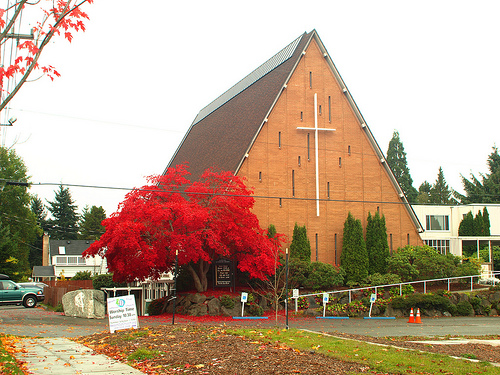
I drove across town, through Lake City, south on 35th past Nathan Hale High School and up Ravenna to Maple Leaf Lutheran Church, a bulky, brown A-frame on the corner of NE 100th & 32nd NE. As I approached, I realized--Hey, I know this neighborhood. My good friend Frank lives here. The Fiddler's Inn is around the corner. My life in Seattle started here. When I arrived, in '99, I stayed with a friend just off Lake City Way. I stayed on his couch (which means I was homeless) while looking for an apartment. I'd come for the love of the mountains. I'd climbed Rainier and was smitten. I quit my publishing job and left Boston for the wilds of Washington. In the first seven days, I took a job as a baker in Wedgewood. Every morning, I rode my bike across Lake City Way and up 35th in the dark, cold, wet, October predawn, leaves painting the roadways. Two months later, I had a shared apartment in West Seattle and took another job. Then I landed a steady job at a publishing house and moved again. Then I became a project manager at the UW. It wasn't until 2001 that I moved into the little studio apartment I called home. I stayed there for two years and then was sailing and able to buy a little sailboat and another dream spread itself before me--to sail around the world--which I did go and crew on a boat out of CA across the Pacific to Polynesia where I lived in a lagoon for three months. Home. Where is home? Here it is, in a parking lot in Meadowbrook. With a red brick neighbor with a cross to bear and others who don't want me here: "No Tent City."

Neighborhood Notification Meeting
There was a "Neighborhood Notification Meeting Regarding Temporary Encampment" at Maple Leaf Lutheran Church on Sunday 14 November. This meeting was intended to "provide an opportunity for the public to learn more about SHARE/WHEEL's Tent City3." I found out about it by chance, just the day before, when paging through the church's website (the host site typically has a tab dedicated to info about Tent City). I went to the meeting to show my support and get a sense of the camp-to-public interface. I also wanted to meet the outreach coordinator for the church whom I'd spoken to on the phone. I still have so many questions. I don't know what the relationship is between the church and the camp or how SHARE/WHEEL communicates with them. I don't know if any indoor places have been identified for holding classes or meetings or perhaps that's just not done. What is an acceptable noise level? Can residents play music in camp? What is discussed at the weekly meetings? Is there an inter-camp mail system? I wonder Are there any existing programs that meet daily or weekly? Do people stay in the camp during the day or does camp empty out in the morning? How are meals organized? How strict is the footprint of Tent City? Where will my desk go? How about my tent? Most of these questions will, no doubt, be quickly answered when I begin to live there.

Exposed
There was a sign on the main door directing neighbors to the basement of the church. The basement was configured with ten rows of folding chairs, a speaker's podium, a row of banquet tables with a microphone and several staffed information tables around the room. I saw Roger straight away. Hello hello! Roger has been my main contact for TC3. He's a woodsman-like character with wire-frame glasses, a sock hat and plaid jacket. He reminds me of Pierre (Count Pyotr Kirillovich), the protagonist in War & Peace, capable of great joy, but reserved, holding on to something, sparkling beneath the surface.

I wandered about the room meeting residents, neighbors, church representatives and SHARE/WHEEL advocates. I learned there would be no contact between the 30 homeless staying overnight in the church (who are sent by bus and must arrive together and are offered mats on the floor from 9pm to 7am) and the 100 homeless men and women living in Tent City3 (who must sign in once a day to maintain their residency and who live in tents and leave their belongings and attend meetings and fulfill camp duties), even though they are sponsored by the same organization, SHARE/WHEEL. I learned about a plan that is underway to provide a warm, dry place for four hours to the residents of Tent City on Christmas Day and about a plan for making Valentines in February.

The meeting was called to session at 7pm. There were roughly forty, middle-aged, Caucasian adult men and women in attendance. Pastor Julie Blum of Maple Leaf Lutheran Church welcomed everyone. Pastor Steve Grumm of Our Redeemer's Lutheran Church in Loyal Heights, a past host of TC3, managed the meeting from there on out. One of his first statements was, "We will all be civil." A flag went up for me. After a short presentation by the residents of Tent City3, the floor was opened to questions. Those who wished to pose a question or make a statement had to sign up. Each person was given two minutes.

Civil
Some came forward with an interest in helping. Some offered praise or recommendations for Tent City. Some talked about the wealth of opportunities Tent City offered them. One said her son learned to play chess at Tent City. Another related a comment by the Seattle Police Department, who called Tent City's visit to their neighborhood a "non-incident." One related an incident, the only one in two years, for which the police were called. Two neighborhood teens were found to be the cause of the disturbance. The most thoughtful question came from a man, a new neighbor, who said he had children and wanted to know what happened to the homeless person who came to Tent City and was rejected because they didn't meet the criteria or wouldn't follow the rules. Do they end up in the bushes nearby? A spokesperson for Tent City explained that those people were escorted to the bus. The escort waited until that person got on the bus. After-hours, they would be put in a cab and the driver given a script. But to which neighborhood they went or from which neighborhood they had come, no one knew. Some were fearful. There was a cluster of fear in a row behind me. Each took a turn at the microphone. None had signed up to speak, but spoke when the floor was opened. Each voiced a concern, not for themselves, but for their children. One asked why the church had "ambushed" them. Another reprimanded a homeless man on the panel for slouching. What these three had in common was the ability to speak, but not listen. Each had to be asked to stop and wait for the response they'd requested. One man was so agitated he left the room. There were audible grumbles from the crowd as he left. By the time the meeting was over, the invisible fence around an invisible Tent City was electric. I felt sick and anxious and emotional. I was impressed by the calm of the residents, by their grace and patience. I congratulated them all afterwards. And they said, "It gets worse." There are roots of fear and faith, I suppose, in the unknown, in the system, in the other, in the wall. And so where do I stand? I have a lot to learn. I want to be strong and brave and graceful like the men and women of Tent City. I want to be able to stand up for what is right, to combat ignorance and fear with love and understanding.

Code of Conduct
Unlike the rest of us, when Tent City moves into a new neighborhood, they must sit before their neighbors and prove they are good people--responsible, quiet, clean, courteous, trustworthy, nonviolent, noncriminal and sober. Despite the fact that Seattle's Tent City is noted as a success story by the National Law Service on Homelessness and Poverty, they must constantly work to prove and improve their reputation. Those wishing to reside in Tent City must go through a screening process. Residents must show an ID, be drug and alcohol free and commit to participating in camp maintenance. They must sign and follow a strict Code of Conduct. Tent City does not tolerate drugs, alcohol or weapons. Neither does it tolerate verbal or physical abuse. Sex offenders are not allowed in Tent City. Those in violation of the code of conduct must leave the community. Two security workers from the community are on duty at all times and check in with all visitors. Quiet hours are observed from 10 p.m. to 8 a.m.

Weather
As I write this, the rain is lashing against the window pane. It is suddenly cold. Winter has found us. The rain is coming down in sheets. It makes me fearful. It makes me worried. It makes me think of the people I don't yet know in tents tonight. Soon it will be me. It makes me think of the people who aren't in tents, those waiting out the storm. For now, I'm relishing the heat in my office.

Related News
City Inside/Out
with C.R. Douglas
A Permanent Home for Nickelsville?
Premiered Friday, Nov. 19, 7 p.m.
After months of negotiation, Mayor Mike McGinn has proposed a more permanent site for the roving homeless tent city of Nickelsville. The mayor wants to set up Nickelsville on a vacant lot in SODO--the industrial area south of downtown. The new site would include tent housing, showers and social services. This is a big change in city policy that up until now has frowned on hosting encampments on public land. Is the new mayor being compassionate or misguided? To hash out the issue, we bring into our studio Seattle Deputy Mayor Darryl Smith, Real Change's Tim Harris and The Seattle Times' Bruce Ramsey.

Thursday, November 11, 2010

Song of Tent City

In late October 2010, I approached Tent City 3 (Seattle's homeless encampment run by SHARE/WHEEL) with the request to join their community as poet-in-residence. They asked me to write up my request and, after doing so and delivering it in person, took my request to a camp-wide meeting and voted on the idea. They came back to me 2 weeks later with an answer. Yes. They said yes. Yes!!! How thrilled I was. To be trusted and welcomed in. I'm certain this opportunity will feed me and teach my poet in tremendous ways. I look forward to working and walking with this community in this way.

Starting December 2010, I will live, work, listen, dialog, write and collaborate with the residents of Tent City 3. I'll install my handmade mini-yurt as a reading room, set up a small camping tent to live in and establish a recognizable interface (a poetry desk) for dialog, all the while assisting where I can with the general operations of the camp. I hope, while I'm there, to listen, respond and give voice to the people in camp. I suspect I will learn so much more than I could ever teach and gain more than I can give, but I go in with an desire wish to serve.

To truly experience the world, one must be fully in it and of it. This is the message we hear from every poet, in every poem. Go live. Live fully. Join life and live. You can see it in the few lines here:
To be alive: not just the carcass/But the spark--Greogry Orr
The birds and their chatter overwhelm me/with feeling--Han Shan
Do not go gentle into that good night--Dylan Thomas
You must take living so seriously/that even at seventy, for example, you’ll plant olive trees--Nazim Hikmet

I've fulfilled several public and private artist residencies now, both self-created and established. My work goes beyond what most people think of as poetry. In fulfilling a poetry residency, it's rare for me to sit at a desk and write all day. I do write and research and read a lot, but I also spend a great deal of time meeting people, sketching, dreaming up public art projects and installing them. I like taking poetry to places it's never been or has long since forgotten. I like using poetry as a vehicle for dialog and community. Place is as important as time to me. I inhabit spaces, find ways to breathe life into them. I listen to them, draw them, write on them, live in them, work in them. The community that builds up around and envelopes me in these places becomes my teacher and my meaning. It helps me live more fully. To it then I owe my own sense of community.

Walt Whitman, in "Song of Myself", raised up the ordinary citizen of the US. He said that each and every one of us, each self, was a part of a larger Self, an ongoing and all-inclusive entity. He showed us how all things and beings commune and connect. While I haven't seen it clearly and don't yet know it fully, I must believe then that Seattle is indelibly connected to and part of Tent City. Where are those verses? Are they written? I go in search of the strains ringing through Tent City. Song of Tent City

A community is a unified body of individuals. If we fence part of ourselves off, we suffer from a split. We suffer on both sides of the fence. Walling off pieces of ourselves keeps us from integrity, keeps us from happiness. We must go back now and pick up the pieces, we must weave them back in. Here in Seattle, hundreds of bits have fallen away, have been walled off. If we work together, we can pick the pieces up, person by person, pair by pair, neighborhood by neighborhood. I offer myself as a camp-to-community interface and invite you to do the same. The more connections we make, the fewer voids there will be. We each have something to offer and receive. Let's realize Whitman's vision and make each member an equal participant.

I started the year as A Corporate Poet. I served for one month as poet-in-residence at NBBJ Architecture and Design Firm. Before that, I was The Poetess of Green Lake. I offer myself now to Tent City. Certainly they, as well as any community, need the poet. "This is the meal equally set, this the meat for natural hunger,It is for the wicked just same as the righteous, I make appointments with all, I will not have a single person slighted or left away…" (Whitman, Song of Myself).

Tent City 3, Seattle's homeless encampment, shifts and moves every three months, from church parking lot to church parking lot. On Thanksgiving weekend, they move again from Saint Mark's Cathedral on Capitol Hill to Maple Leaf Lutheran Church in Meadowbrook.

This blog will provide a place for project updates and information. My experiences at Tent City will take the form of writing, images and performances. It's too early to know what will be produced or what accomplished. The most important thing will be to remain open and to experience and share.

Sprout!
I applied to Sprout, a quarterly fundraiser at The Fremont Abbey in Seattle, and was invited to present my project to a full house (125 people) on 5 November 2010. After a home-cooked meal and a chance to hear six artists present their work, each diner filled out their ballot and voted for one project to receive support. The money collected, $20 per person collected at the door, went to the artist with the most votes. I'm thrilled to report my project was selected to receive the $1000 award. Sprout II was so well attended they were able to give out a second award of $200 to Topstache. Besides being a terrific event with great food and lively conversation, the event brought together a loving group of arts supporters. I can't think of anything better for the local arts scene! The award I received will make a huge impact on my project. It means there are funds to cover materials and living, so I can devote myself to Song of Tent City full-time. Thank you to everyone who came out and supported the artists at Sprout!

Open Brainstorming Sessions
I'm reaching out now to anyone who wants to talk about my project or offer advice or point me in the right direction or lend a hand or offer a skill. I'm holding several, open, drop-in/drop-out, brainstorming sessions: (1) Wednesday 11/17 from 7-10PM at Studio-Current on Capitol Hill, (2) Thursday 11/18 from 6-8PM The Fremont Abbey and (3) Friday 11/19 (9-5PM) in my studio #210 at the Space Building in Fremont. Would love to talk to you for any amount of time. Thanks in advance for your interest and input.